If you’ve searched online, you’ve probably seen headlines claiming that R22 refrigerant is illegal. That statement sounds simple — but the reality is more nuanced.
Much of the confusion comes from how the R22 phase-out has been described over the years. Terms like “banned,” “illegal,” and “outlawed” are often used interchangeably, even though they mean very different things under U.S. environmental law.
This article exists to clarify why R22 is commonly called illegal, what the EPA actually regulates, and how language — not law — created most of the confusion.
What Is R22 Refrigerant?
R22, also known as HCFC-22 or Freon-22, is a refrigerant that was widely used in residential air conditioners, heat pumps, mini-splits, and light commercial HVAC systems for decades.
Because R22 contains chlorine, it contributes to ozone depletion when released into the atmosphere. That environmental impact is the reason the EPA targeted R22 for a gradual phase-out — not because it was unsafe to operate inside equipment.
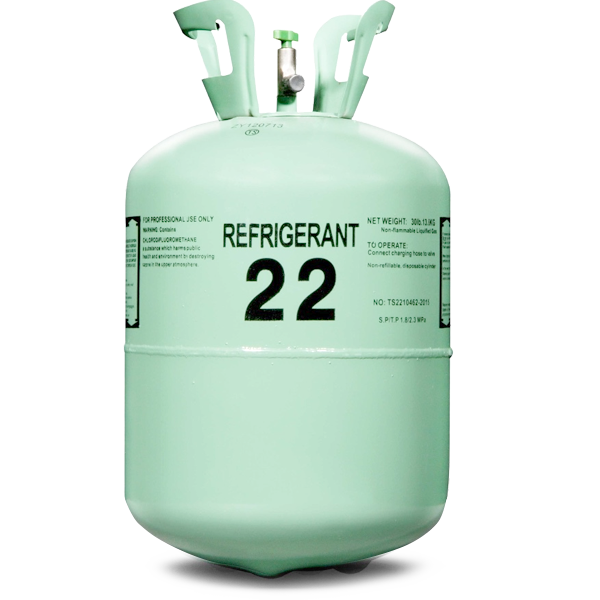
Freon vs R22: Why the Terms Get Mixed Up
One major source of confusion is the word Freon. Freon is a brand name owned by Chemours, not a single chemical.
Over the years, several different refrigerants were sold under the Freon name — including R-12, R-22, and others. Some of those refrigerants were fully banned long ago, while R22 followed a different regulatory path.
As a result, many people hear “Freon is banned” and assume all Freon products — including R22 — became illegal at the same time. That assumption is incorrect.
Is R22 Refrigerant Actually Illegal?
No. R22 is not illegal to own, not illegal to use, and not illegal in existing residential or light commercial HVAC systems.
What is restricted is the manufacturing and importation of new R22 refrigerant. This distinction matters, because it explains why older systems were allowed to continue operating after 2020.
In short: R22 was regulated at the supply level — not criminalized at the equipment or homeowner level.
For a deeper breakdown of EPA rules, legal definitions, and how the R22 phase-out applies to real-world HVAC systems, see this detailed guide: Is R22 illegal or just phased out?
The R22 Phase-Out Explained
The EPA’s R22 phase-out was implemented gradually over many years to avoid forcing millions of homeowners into sudden system replacements.
Production and importation were reduced step-by-step until they officially ended on January 1, 2020. Existing refrigerant stocks were allowed to remain in circulation for servicing older systems.
Official EPA documentation can be found on the EPA Ozone-Depleting Substances page.
What the EPA Changed — and What It Didn’t
| EPA Action | What It Means |
|---|---|
| R22 production stopped | No new R22 is manufactured or imported after Jan 1, 2020 |
| Existing supplies allowed | Recovered and stockpiled R22 can still be used |
| Existing systems permitted | Older HVAC equipment was not outlawed |
R22 Phase-Out Timeline & Homeowner Impact
- 2010: Ban on new R22 equipment
- 2020: Production & import of R22 ends
- Today: Reclaimed & stockpiled R22 still legal
After January 1, 2020, the manufacture and import of R22 Freon were prohibited in the United States. It's important to clarify that this ban affects:
- R22 refrigerant suppliers, importers, and manufacturers like Honeywell, Dupont Refrigeration, and others.
- Air conditioning and refrigeration manufacturers such as Trane, Goodman, Rheem, and more.
However, existing R22 supplies can still be utilized for servicing existing equipment, with some exceptions for large industrial systems and those with high leak rates.
Therefore, if you have a residential air conditioner that uses R22 Freon, you can legally and confidently still replenish it with R22.
An important factor to consider is that the availability and cost of R22 have significantly risen due to its limited supply. Homeowners often ask:
- Should I replace my AC if it uses R22? – Not necessarily. If the system is operating well and has only minor repairable leaks, refilling with existing R22 supplies is a legal and cost-effective solution.
- Do I have to replace my R22 air conditioner? – No. Federal law does not require replacement. Replacement is usually recommended only for older, inefficient systems with recurring leaks or components that are costly to repair.
Decisions vary depending on the system's age, condition, and performance. Professional evaluation is strongly recommended to determine the best long-term option.
Quick Reference Table: R22 Phase-Out
Below is a quick overview of the key aspects related to the R22 phase-out:
| Aspect | Details |
|---|---|
| Legal Status | R22 is legal for existing residential and light commercial systems (50 lbs or less). |
| Production & Import | Production and import of R22 were banned after January 1, 2020. |
| Servicing Existing Systems | Existing R22 supplies can be used for servicing. |
| Replacement Options | Consider transitioning to R410A (note its phase-out in 2023). |
What “Phased Out” Really Means
In EPA terminology, phased out means the government stopped allowing new production and importation — not that existing equipment became illegal overnight.
This is why R22 is often described incorrectly online. “Illegal” is simpler language, but it does not accurately reflect how the regulation works.
Regulations may vary by jurisdiction. Always verify requirements with your local Authority Having Jurisdiction (AHJ).
Refrigerant Leaks and What *Is* Illegal
While R22 itself is not illegal, venting refrigerant into the atmosphere is illegal under the Clean Air Act — regardless of refrigerant type.
Refrigerant leak repair must be performed by an EPA Section 608 certified technician. This requirement has existed for decades and applies to all refrigerants, not just R22.
For homeowners wondering about the legal status of R22, is R22 illegal or just phased out? provides a clear, detailed explanation including EPA rules and safe handling practices.
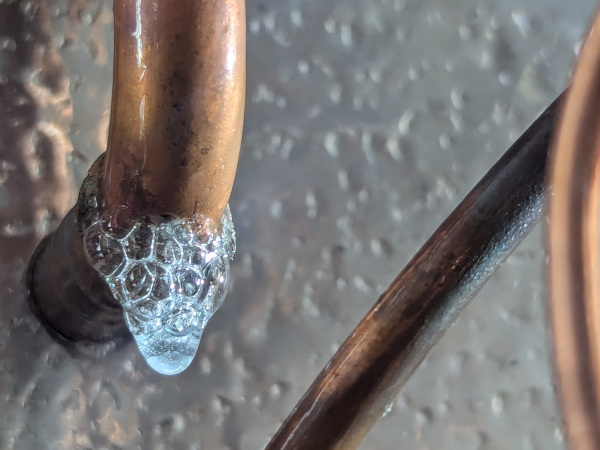
Picture of R22 leak. HVAC repair in Montclair involves recovery, pressure testing, and documentation — not simply “adding Freon,” which is totally legal.